KLOW Source
A closed wound leaves KLOW peptide questions open
A wound can close while questions about the tissue beneath it remain. The KLOW experiments give healing several different measures.
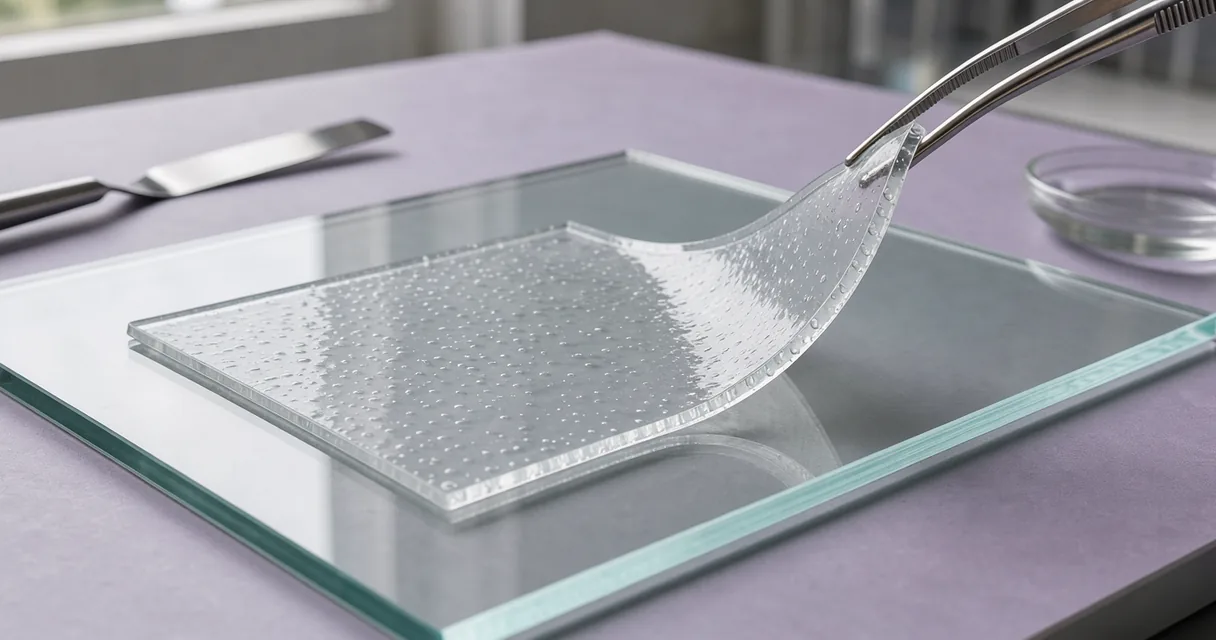
The GHK-C16 hydrogel
Wound closure sounds like a satisfying finish to a KLOW peptide repair story. A 2023 wound-healing experiment makes it a beginning. Researchers reported improved wound closure in mice, densely remodeled collagen and enhanced new blood-vessel formation using GHK-C16 peptide nanofibers embedded in a hyaluronic-acid hydrogel. Human dermal fibroblasts, the skin's connective-tissue cells, were studied in culture too.
Wound closure, collagen remodeling and new blood vessels: three findings within one repair experiment.
At first, closure seemed the most persuasive finding. The collagen and blood-vessel findings made that seem too narrow. Covering a wound, rebuilding its connective tissue and restoring its function are different ambitions; each needs a measurement suited to it. The paper's mouse and cell findings make the distinctions tangible, while leaving human recovery unresolved.
That is the question behind KLOW Source: when an experiment reports healing, which part of repair has it actually measured?
What is KLOW peptide
KLOW peptide is a blend of KPV, GHK-Cu, BPC-157 and TB-500. The four constituents remain separate molecules. A commonly listed research formulation contains 80 mg total: 50 mg GHK-Cu and 10 mg each of BPC-157, TB-500 and KPV. The composition table gives those amounts their formulation context.
The appeal is repair: inflammatory signaling, connective tissue, blood-vessel growth and cell movement all feature in the constituent literature. No controlled study has tested the KLOW combination against a single constituent, a smaller combination or placebo. A compelling collection of experiments still leaves the combination question open.
KLOW peptide blend research
The repair measures vary considerably. KPV reduced inflammatory signaling in human intestinal and immune cell cultures, and oral KPV reduced colitis severity in mice. BPC-157 improved healing after a rat Achilles tendon was fully cut. The GHK skin review describes human topical cosmetic studies alongside laboratory work. A much-cited rat wound experiment used full-length thymosin beta-4, the protein from which the short TB-500 fragment is derived.
I enjoy this unruly collection more than the tidy four-part repair story. Inflammatory signaling, skin appearance and tendon integrity give “recovery” very different meanings. The research page examines those measurements; the ingredient pages deal with the molecules themselves.
KLOW blend status
KLOW and its four constituents have no FDA approval for human use. The FDA safety-risk list records BPC-157, KPV, TB-500 and injectable GHK-Cu as ‘nominated but withdrawn’, with the agency's safety concerns still attached. Withdrawal of a nomination confers neither drug approval nor permission to compound it.
The 2026 review of musculoskeletal peptide therapies describes encouraging animal findings alongside scarce rigorous human safety data and the potential for serious harm. TB-500/thymosin beta-4 is prohibited at all times under WADA's S2 category. The effects and safety page also covers copper handling, immune signaling and the anecdotal accounts circulating around KLOW peptides.
The specific repair outcome matters when judging a blend result. The useful next experiment would compare the complete blend with its constituents in the same tissue model, assessing tissue structure alongside function.